

Pillar guide
Remote CFO Services Hub for US Small Businesses
Start here for Remote CFO guidance on cash flow, forecasting, margins, board reporting, ecommerce finance, and when to choose outsourced CFO support.
Open guide
Articles on bookkeeping, remote CFO advisory, software selection, and financial forecasting for growing businesses.
These hubs organize the core Remote Financial Services articles by buyer question, business model, and decision stage.
Start here for Remote CFO guidance on cash flow, forecasting, margins, board reporting, ecommerce finance, and when to choose outsourced CFO support.

Compare bookkeeping software, virtual and outsourced bookkeeping, monthly close, and reporting so US small businesses pick the right finance support.

Industry-specific finance guides for US SMBs: construction job costing, ecommerce margins, inventory cash flow, real estate, and trucking accounting.

A practical hub for monthly close, revenue recognition, expense recognition, accounting workflow, multi-entity reporting, and real-time financial visibility.

Learn what happens in a virtual CFO consultation, what financial records to prepare, which questions to ask, and what a small business should expect next.

Federal record retention periods for US businesses: the IRS 3-, 4-, 6-, and 7-year rules, payroll and HR recordkeeping, digital storage, and state exceptions.

Franchise accounting for US franchisees and franchisors: royalty and ad-fund entries, unit charts, location close, and comparable-unit dashboards.

How to read a small-business cash-flow statement under US GAAP — operating, investing, and financing sections, a worked example, and section-level red flags.

DSCR formula with worked business and property examples, an annual debt-service schedule, and the EBITDA vs. NOI vs. CFADS definitions US lenders use.

Calculate landed cost per unit, allocate freight and duty across SKUs, and see the journal entries that move those costs into inventory and cost of goods sold.

Bank reconciliation for small business, step by step: key terms, a worked statement-to-ledger example with timing differences and a month-end checklist.

Customer profitability analysis formula and example for US service, wholesale, and ecommerce businesses: cost to serve, concentration risk, and pricing rules.

How US contractors book approved and pending change orders: ASC 606 revenue treatment, cost codes, billing lines, WIP effect, margin math, and a control log.

Accrued expenses vs. accounts payable under US GAAP: one waits on an invoice, the other does not. Examples, journal entries, reversals, and a close checklist.

How US professional-services firms keep project-based books: unbilled WIP, utilization, realization, project margin, and a month-end close checklist.

Design internal controls for a small US business: risk-control-owner matrix, two-person compensating controls, approval thresholds, evidence log.

See how a budget differs from a forecast, when to use each, and how to read budget-to-actual and forecast-to-actual variances with worked examples.

Read a construction job-cost report line by line: cost codes, committed cost, actuals, forecast to complete, variance, and margin, with a worked example.

Compare deferred and accrued revenue, see when earned amounts become receivables, and follow US GAAP journal-entry examples.

Financial due-diligence checklist for US small-business fundraising: data-room index, tie-outs, reporting history, metric definitions, and issue log.

Build a monthly rolling forecast for a US small business: a driver-based 12-month model, actuals roll-forward, scenario bands, and forecast-error review.

Inventory reconciliation steps for US small businesses: count-to-subledger-to-GL tie-out, cutoff checks, variance classification, and journal entries.

Construction WIP schedule example for US contractors: percent complete, earned revenue, over/under billings, and a monthly review checklist.
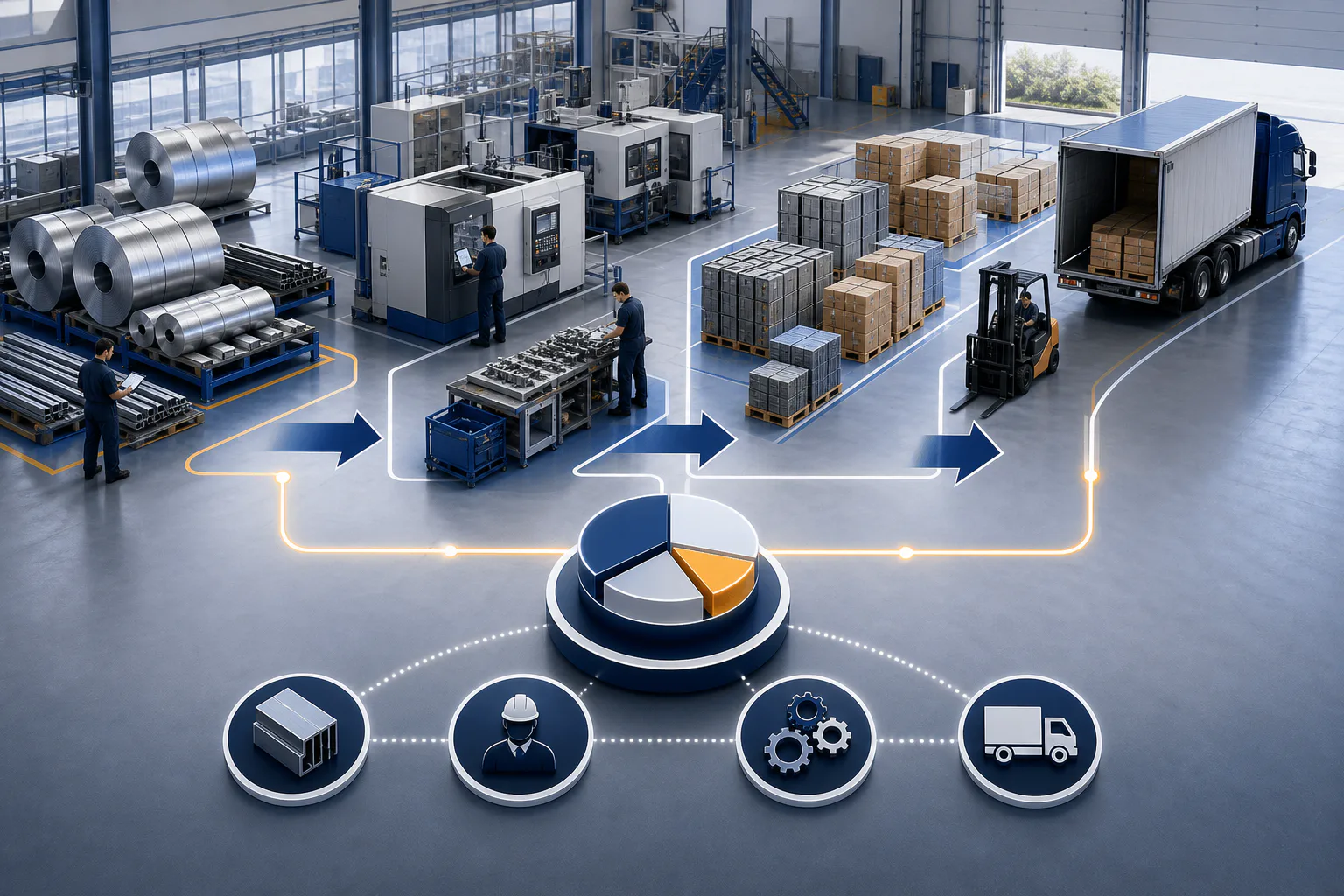
US manufacturing accounting: raw materials, WIP, finished goods, overhead allocation, and COGS — with a worked product-cost example and monthly close map.

Budget variance analysis explained for US small businesses: the formula, a worked price/volume/timing example, materiality thresholds, and owner action steps.

Cash conversion cycle = DIO + DSO - DPO. Worked US small-business example, sensitivity table, and ways to free cash without harming vendors or customers.
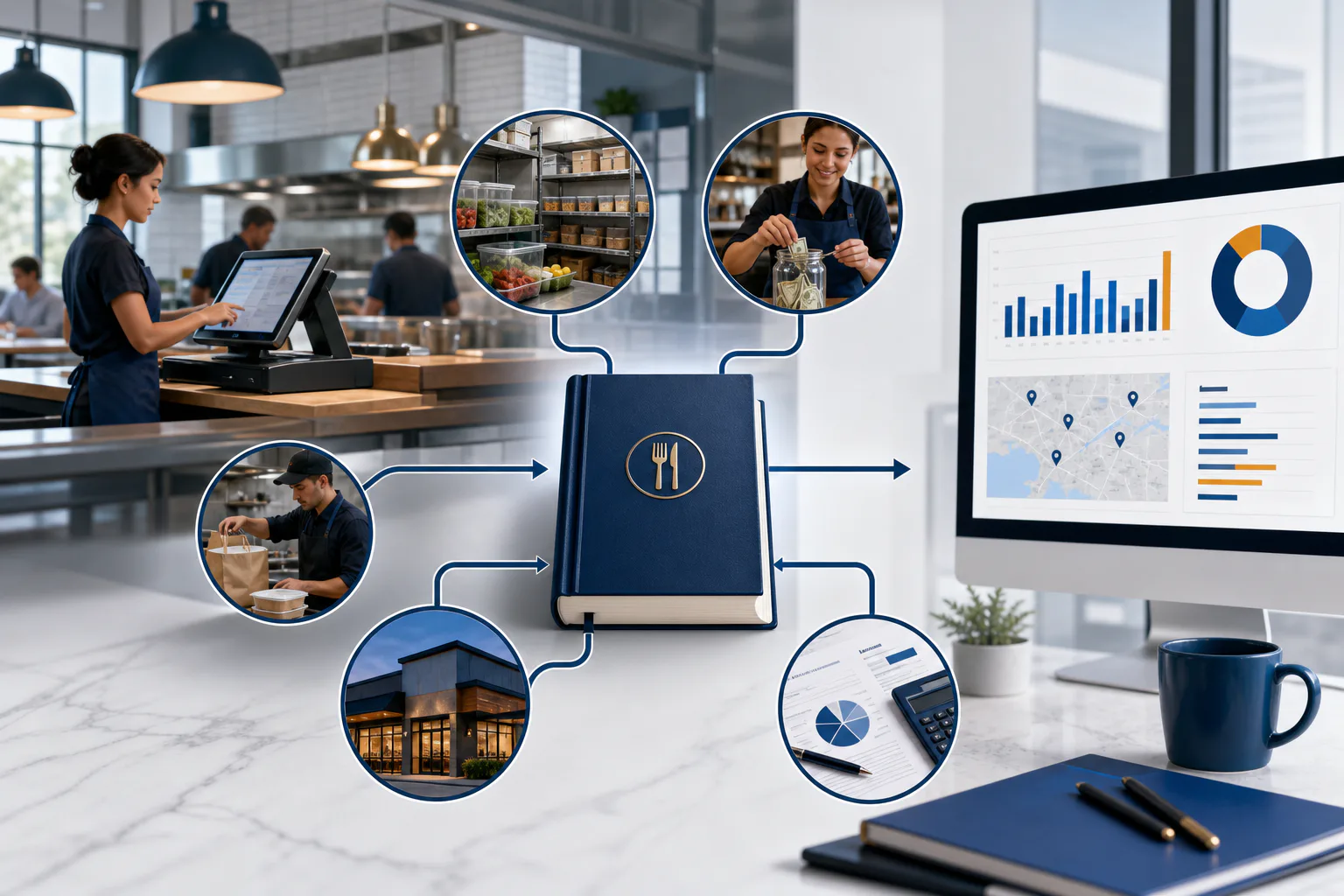
Restaurant bookkeeping for US owners: reconcile daily sales to bank deposits, book delivery fees and tips, track food COGS, and build location P&Ls.

SaaS accounting under US GAAP: recognize subscription revenue over the service period, track deferred revenue, and reconcile billing, cash, and MRR monthly.
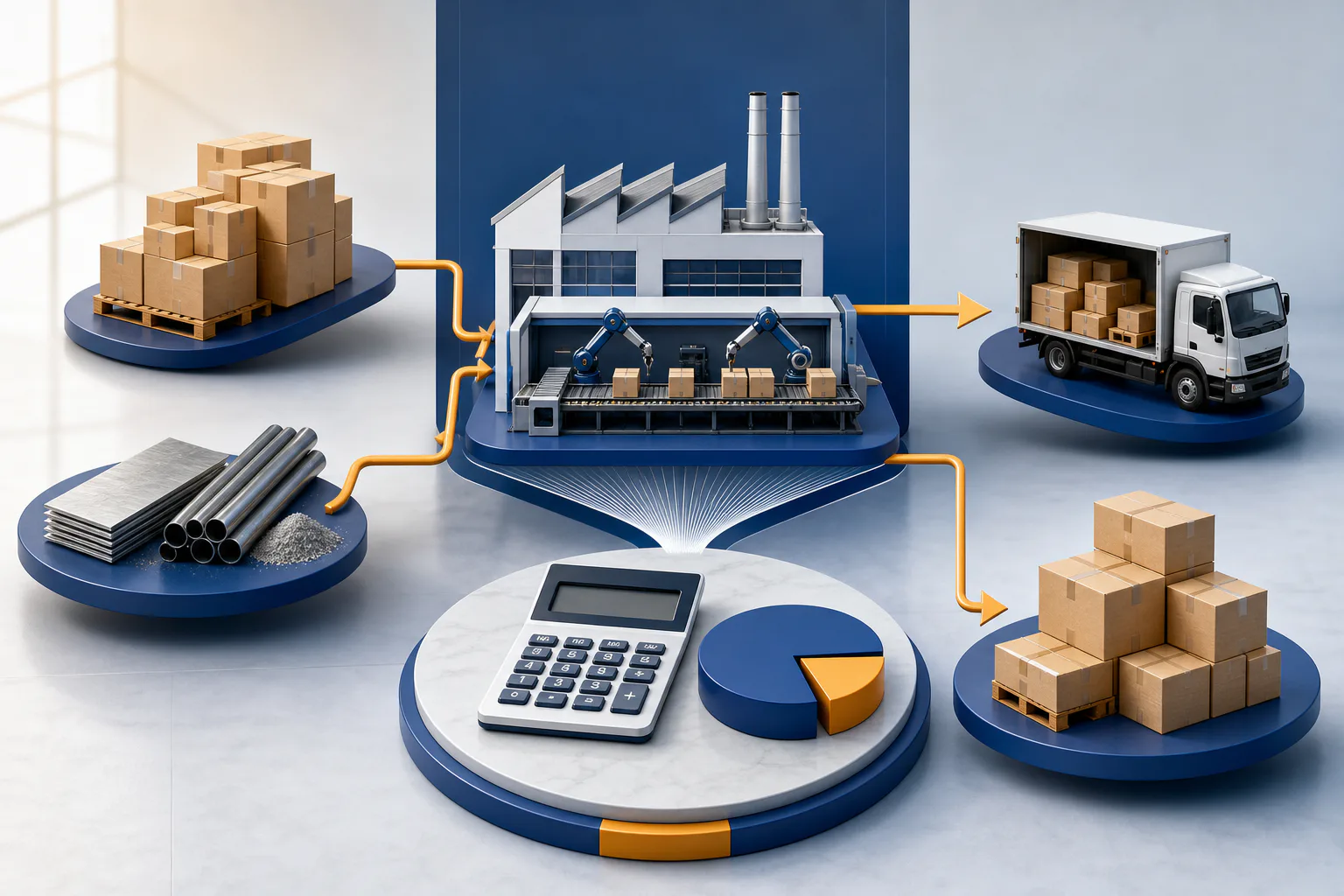
Cost of goods sold = beginning inventory + purchases + direct costs − ending inventory. US formula, tax rules, and retail, manufacturer, and service examples.

Get books, reconciliations and supporting records ready with a 30-day audit preparation plan, a PBC register and a worked bank-reconciliation example.

Cash flow vs. profit for US small businesses: why a profitable business can run out of cash, with a worked net-income-to-cash bridge and fixes.

A step-by-step accounts payable process for US small businesses: vendor setup with Form W-9, approval flow, three-way match, payment controls, and 1099 prep.

How US ecommerce sellers keep clean books: reconcile Shopify, Amazon, and Stripe deposits to gross sales, fees, COGS, inventory, returns, and state sales tax.

Inventory turnover ratio = cost of goods sold ÷ average inventory. Worked annual and monthly examples, days-in-inventory conversion, and next actions.

Working capital equals current assets minus current liabilities. See an example and how net working capital differs from operating working capital.
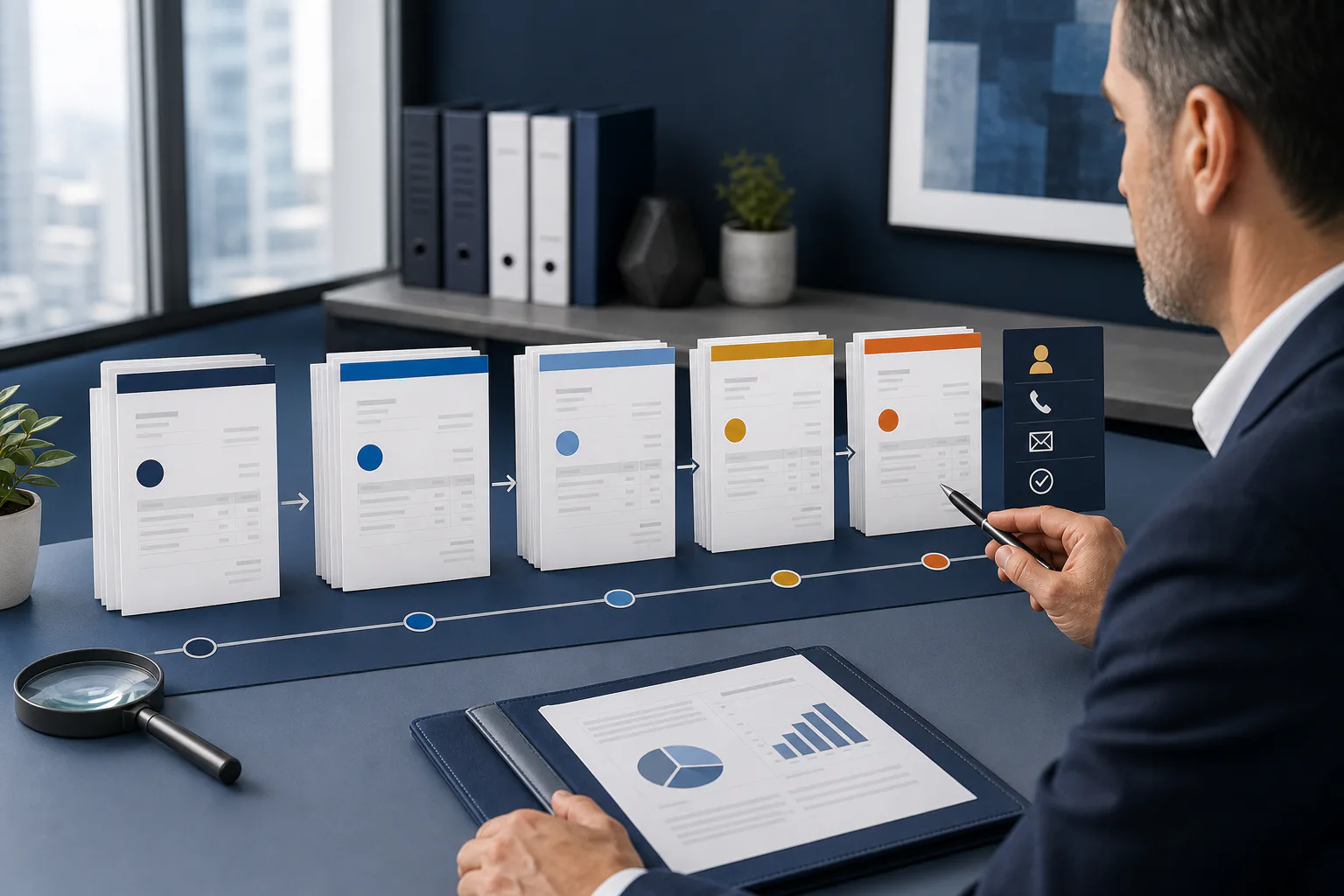
See an accounts receivable aging report example, learn what AR aging means, reconcile it to the balance sheet, and act on overdue invoices.

Behind on your books? Catch-up bookkeeping for US small businesses: a backlog diagnostic, market-example cleanup costs, timelines, and a tax-ready plan.

Compare true 1099 vs. W-2 hiring cost in US construction and trucking, with a worked loaded-cost example — after checking legal worker classification.
Compare cash runway with a 13-week cash flow forecast, learn what each reveals, and use both to make better short-term cash decisions.
Build a reliable small business accounting workflow with clear owners, deadlines, reconciliations, reviews, and a repeatable month-end close checklist.
The S-Corp election deadline is 2 months and 15 days into the tax year. Learn how Form 2553 works, late-election relief, and the state quirks to check.
A reasonable S-Corp salary is what you would pay someone to do your job. See which facts the IRS weighs and how to document your pay.
A Remote CFO helps ecommerce businesses manage inventory cash flow, gross margin, ad spend, channel profitability, and forecasting for growth decisions.

How to choose bookkeeping software for a US service business: map the workflow, then test bank feeds, invoicing, payroll, reporting, exports, and support.
A Remote CFO delivers outsourced, CFO-level strategy for US small businesses: cash forecasting, margin analysis, budgeting, and lender-ready reporting.
Construction bookkeeping tracks labor, materials, and subs by job so contractors see real profit. A guide to job costing, WIP, retainage, and cash flow.
What a virtual bookkeeper does for US small businesses, typical monthly cost, the deliverables to expect, and when to add fractional CFO support.

Compare full-time and fractional CFO options for US small businesses. Evaluate costs, coverage, reporting needs, and when to hire.

Set up remote accounting with clear responsibilities, secure access, reconciled reports, and a monthly handoff your team can follow.

A remote finance team can combine bookkeeping, controller review, and CFO planning. Compare roles, engagement models, handoffs, and costs before hiring.
See how remote bookkeeping works, set up secure access and owner approvals, and check what to expect in the first monthly close.
Remote financial services deliver bookkeeping, accounting, payroll, and consulting virtually through secure cloud platforms. How they work and who they fit.

Bookkeeping consulting sets up clean systems, controls cash flow, and builds forecasts. 10 ways a consultant helps your business grow smarter and faster.

Bookkeeping for real estate investors tracks each property's income, expenses, deposits, debt, and depreciation so owners can compare returns and cash flow.

See what outsourced bookkeeping includes, how to compare its scope and cost with an in-house hire, and what your team still needs to own.

Real estate bookkeeping tracks rent, mortgages, expenses, and depreciation by property so owners protect cash flow, stay audit-ready, and measure true ROI.
Small business inventory management connects stock, purchasing, and sales data to bookkeeping so COGS, gross margin, and cash flow stay accurate.

See which accounting functions small businesses can outsource and how to compare bookkeeping, payroll, reporting, and controller support by scope and cost.
Task management for accountants turns recurring client work into owned, dated, reviewable workflows with clear handoffs and completion evidence.

Compare bookkeeping pricing models, calculate first-year costs, and check whether monthly quotes cover the accounts and reports your business needs.

Multi-entity consolidation merges separate legal entities into one report set under ASC 810. Learn the steps and how to eliminate intercompany transactions.

Learn when to record revenue under ASC 606, with practical examples for service, ecommerce, subscription, and construction businesses.

Undeposited funds hold customer payments before a bank deposit is recorded. Learn how to match deposits, correct duplicates safely, and reconcile the account.

Expense recognition determines when costs appear under US GAAP. See matching, allocation, immediate recognition, journal entries, and cash-timing examples.
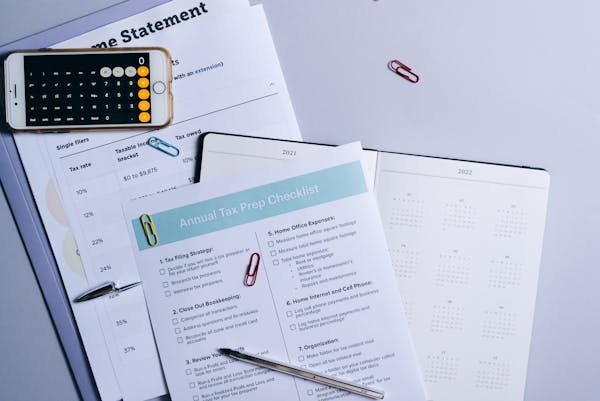
The top bookkeeping best practices: separate finances, reconcile monthly, track cash flow, plan taxes year-round, and know when to hire a professional.

A startup financial plan covers six parts: budget, cash flow forecast, revenue projections, cost controls, funding strategy, and a contingency reserve.

See how cloud tools, shared records, and flexible staffing make outsourced accounting practical, and what to check before moving accounting work outside.

Accountants now advise on pricing, cash flow, funding, and growth, not just record history. How the role became a strategic business partner for SMBs.

The 10 bookkeeping basics every US small business needs: cash vs accrual, chart of accounts, reconciliation, cash flow, and staying tax compliant.
See how real-time accounting connects bank feeds, cloud software, reconciliations, and dashboards—and when a small business is ready to adopt it.

The finance trends shaping 2026 for small businesses: AI-assisted bookkeeping, real-time reporting, embedded finance, and stronger cybersecurity.

Track these financial metrics with formulas and decision cues: revenue growth, net margin, CAC, LTV, operating cash flow, current ratio, and more.

Learn bookkeeping basics for small businesses: double-entry accounting, chart of accounts, recording, reconciliation, financial statements, and software.

Evaluate accounting automation, connected systems, remote access, and advisory reporting with practical checks for small business finance teams.

Cash vs accrual accounting: which is right for your business? Key differences, pros and cons, tax impact, and when to switch between methods.

What is a good profit margin for a small business? Compare 2026 gross and net margins by industry, calculate yours, and set a defensible target.

Compare seven ways to do accounting: in-house, outsourced, software, bookkeepers, virtual, freelance, and hybrid, and find the right fit for your business.

Assess whether a remote finance team fits long term. Check reporting cadence, access controls, payment approvals, and how the provider hands records back.

What a remote financial analyst does, what one costs versus a full-time hire, and how to choose between a freelancer, agency, or dedicated remote employee.

Bookkeeping services turn raw transactions into clean data that fuels financial analysis, forecasting, and smarter growth decisions for business owners.

Construction bookkeeping tracks job costs, retainage, change orders, and cash flow per project so contractors know which jobs are actually profitable.

A chart of accounts (COA) lists every account in your general ledger by category, feeding your balance sheet and income statement. Here is how to build one.

A practical financial playbook for small business owners: the weekly, monthly, and quarterly tasks that keep your books, cash flow, and taxes under control.

How to find the right ecommerce accountant for your stage, sales channels, and inventory, plus five criteria for vetting multi-channel sales tax expertise.

How to select the best bookkeeping service: choose in-house or outsourced, then vet providers on experience, software, security, pricing, and scalability.

The balance sheet, income statement, and cash flow statement explained, and how business owners read them together to make sound decisions.

Trucking accounting tracks freight revenue, fuel, IFTA, driver payroll, and per-vehicle profit. Learn what to track and how to keep margins healthy.

Compare bookkeeping and accounting across seven responsibilities, and see which role your small business needs for reconciliations, reporting, and review.

Onboard a remote bookkeeper or CFO fast with a day-one access checklist and a 30-60-90 day plan that turns a new finance hire into a strategic asset.

How the IRS selects returns for audits, which discrepancies to check before filing, and what records a small business can use to explain them.

Outsourced accounting gives you senior financial expertise, lower fixed costs, and scalable support without hiring a full in-house team. Here is why it works.